

It was seven years ago today that boxing finally got the rematch it needed: Golovkin vs Canelo II. The word ‘finally’ here is a loaded one, with various connotations regarding the interminable wait suffered by action-starved fight fans after it became crystal clear that the two best fighters competing at 160 pounds were Saul “Canelo” Alvarez and Gennadiy Golovkin. That was back in 2015, when Alvarez defeated Miguel Cotto, but for various reasons a Golovkin vs Canelo showdown did not happen until September of 2017.
And when Gennady Gennadyevich Golovkin vs Santos Saúl Álvarez Barragán, Part I, finally did go down, it left a bad taste in the mouths of fans hungry for some coherence in the sport they love. The fight itself was lively and highly competitive, but the judges made a mockery of it. While the vast majority saw the Kazakh as the clear victor, the official tally was a split draw, accompanied as it was by the outrageous scorecard of one Adalaide Byrd, who tabbed Canelo the winner by an absurd eight points.
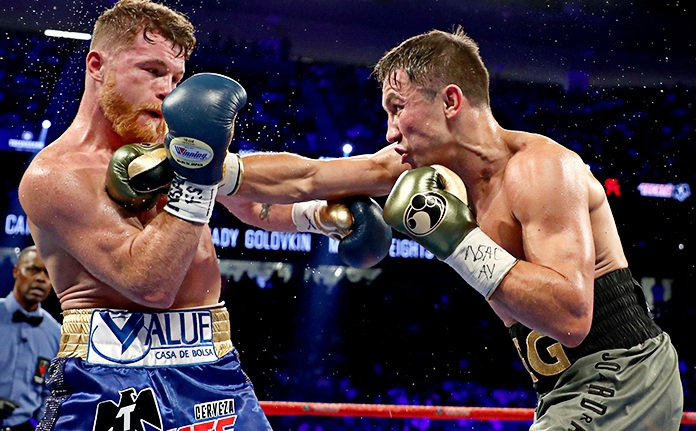
So, when the rematch finally happened (after Canelo had tested positive for the performance enhancing drug clenbuterol and then endured a meaningless, back-dated six month suspension), there was the sense by some that finally it was time for some overdue justice and payback for Gennady Golovkin. Instead, though it was a twelve round classic and one of the best fights of recent years, not to mention our Fight Of The Year, it was inconclusive, with the judges scoring it for the Mexican, while the vast majority of ringside press saw it for the Kazakh.
It is our conviction that few writers captured the zeitgeist of this moment in recent boxing history better than our own Robert Portis, so on the anniversary of a truly great fight, we once again offer his excellent take on what he views as the unfulfilled promise of the Golovkin vs Canelo rivalry. Herewith seven take-aways following the astonishing and thrilling and yet, for Portis, dispiriting event that was the long awaited rematch between the two best middleweights in the world. Check it out:
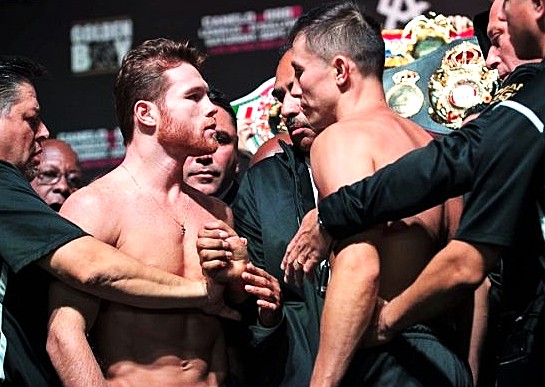
Canelo can fight on the front foot; Gennady can box on the backfoot …
For the rematch, Canelo and Golovkin reversed the roles they assigned themselves the first time around. Last year, the Mexican adopted the role of boxer/counterpuncher while Golovkin endlessly stalked. But this time, Canelo pressed forward from the opening bell with blistering combinations and forced Golovkin to fight off his back foot, in passing earning the respect of Golovkin’s trainer, Abel Sanchez, who in the buildup to this fight accused Canelo of being a runner. Yes, Canelo’s wonky right knee, which sported some kind of sleeve or brace, may have been a factor in the Mexican’s gameplan and restricted his mobility, but whatever the case, it was an unexpected tactical gambit from Alvarez.
Meanwhile, the Kazakh complied admirably in an unfamiliar position: his counters were both accurate and powerful, and when trading tit-for-tat with the Mexican, he often got the better of it with his stinging jab and hurtful power punches. By performing effectively against an attacking Canelo, Golovkin also proved wrong Canelo’s trainer, who before the fight had called Triple-G “a donkey that doesn’t think.” In short, Canelo vs GGG2 gave us a very different scrap from the first duel, a reminder of the versatility of these two elite middleweights, and proof of the depth of their fighting game.
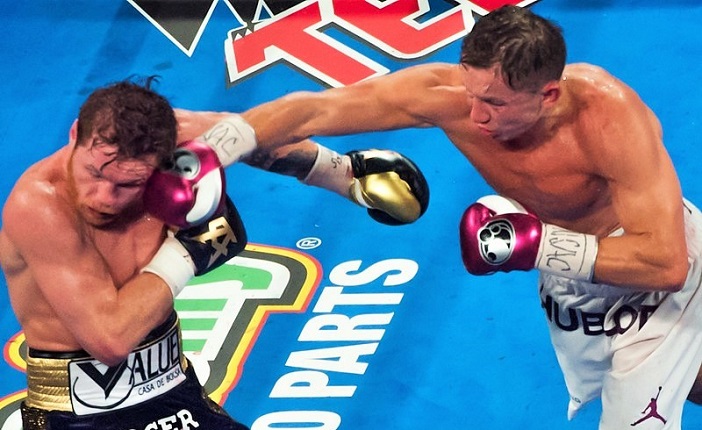
…and it made for one hell of a battle.
The role-reversal played a huge part in delivering a scintillating encounter that more than made up for all the mamadas we had to endure to get to Golovkin vs Canelo II, an engrossing and intense battle contested at an extremely high skill level by both warriors. It’s clearly a solid candidate for Fight Of The Year, and easily overshadows the original chapter in terms of sustained action. Pretty much every round from the seventh onwards had fans on the edge of their seats, with rounds nine and twelve definitely in the running for Round of the Year. Featuring plenty of fiery exchanges, minute-by-minute shifts of momentum, and more than a handful of intense, close rounds, Alvarez and Golovkin earned their big, fat paychecks and then some.
Both warriors have iron chins.
Yet another reason Canelo vs Golovkin II was such a thrilling matchup is that with the violence ratcheted up to eleven, and with both gladiators looking to settle personal scores, both fighters endured what are usually fight-ending power shots as if their mandibles were composed of high-grade steel. But even after making use of every weapon in their arsenal, neither yielded ground, neither visited the canvas, and both fought to win until the very end. It’s the kind of stuff fight fans yearn for every time a so-called megafight is announced; thankfully, this time the megafight lived up to our expectations. Any more talk of either one of these guys being afraid of the other—or of anyone else in the vicinity of the middleweight division—is unabashed trolling.

Canelo fought the fight of his life, but that doesn’t mean he won.
Even though both middleweights performed admirably last weekend, it was Canelo who earned more plaudits, not only for earning the judges’ nod via majority decision, but by his change of tactics and for standing toe-to-toe with Golovkin for long periods of time. Meanwhile, it is widely perceived that Golovkin merely performed the way we expected him to. But an argument can be made that—despite posting the best performance of his career so far—Canelo simply didn’t deserve to have his hand raised at the final bell. This is because Golovkin not only outworked Canelo in a majority of rounds, but also connected more consistently.
The Mexican might have landed the more eye-catching shots, but Golovkin is the one who managed the fight with his jab while barely allowing any of Canelo’s scoring shots to go unanswered. The general consensus seems to be that Canelo improved his form just enough to make the rematch a much closer encounter than the first fight, but not enough to earn a decision. Reinforcing this perspective is the fact that of eighteen media outlets scoring the fight, ten saw Golovkin as the rightful winner, seven scored it a draw, while only one scored it for Canelo.
The Las Vegas cash-cow bias is alive and well.
Which brings us to the ugly side of megafights: controversial decisions. As per usual following a close fight these days, cries of robbery! inundated social media once the verdict was announced, this despite the fact Canelo getting the points victory isn’t anywhere near the top of the list of the worst decisions of all time. That said, what really bothers those of us who saw Golovkin outwork Canelo last weekend, is that even though a majority of fans and media members believe the Kazakh did enough to defeat Canelo in both fights, only a single judge’s card out of a possible six has been in his favor in this rivalry so far. To put it mildly, something is rotten in the state of Nevada.
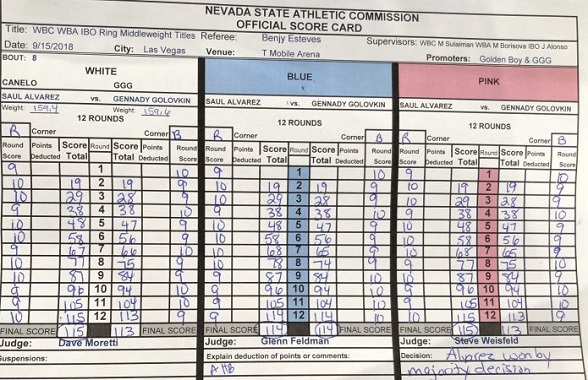
In fact, to see just how statistically odd it is to not have seen a single card last weekend in favor of Golovkin, check out this reddit compilation of 59 cards from media members, with only two (!) favoring Canelo, and a whopping forty calling it for Golovkin. Whether conscious or subconscious, the scoring bias on the part of the judges in favor of the sport’s cash king is simply undeniable. Keep in mind, this decision maybe wouldn’t bother us so much if Canelo didn’t already have a history of being favored in close fights. Not only did the judges award him victories and suspiciously wide cards in close fights against Austin Trout and Erislandy Lara, he somehow received a draw card in what was essentially a shutout loss to Floyd Mayweather back in 2013.
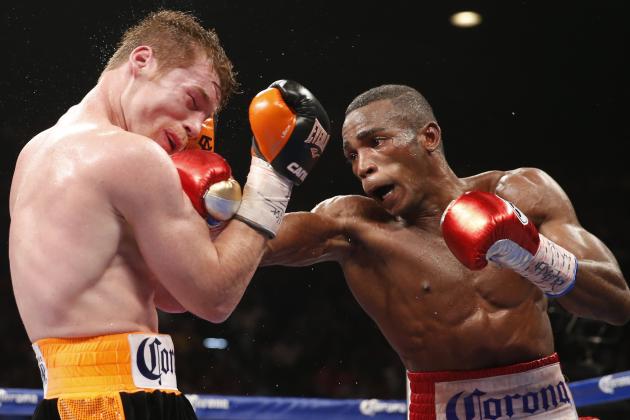
Time is definitely on Canelo’s side.
An exciting, high-octane fight, controversy, and truckloads of money are an excellent recipe for a repeat, so we may see a Canelo vs Golovkin trilogy match sometime soon, but then again, given recent history, there’s as much reason to think it won’t happen. What is certain is that the longer the bout is postponed, the more Canelo will benefit, as Canelo is still improving, while Golovkin is only getting older. To wit, a large majority of observers believed Golovkin earned a decisive victory last year; for the rematch, the range of acceptable scorecards included anything from GGG winning by four rounds to a draw. Hence, for the rubbermatch we could expect the gap between the Kazakh and the Mexican to narrow further, perhaps even making Canelo the clear favorite in the buildup. Don’t feel too bad for Golovkin, though: after spending years in search of quality opponents and big purses, he has now cashed two eight-figure paychecks within a year, with the promise of more to come.
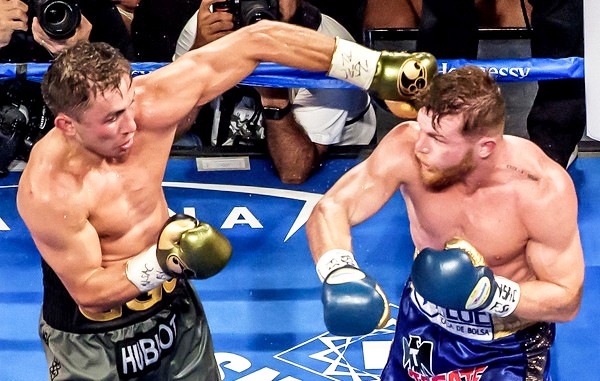
But only in boxing can obvious greatness be denied.
The only way to be a truly great boxer, one destined for the Hall Of Fame and the history books, is to face and vanquish other great fighters. Until last week, Gennady Golovkin was undefeated and had owned some version of the middleweight world title for six years or more. But the most prominent characteristic of his reign was how so many of his rivals managed to avoid him, and thus he was denied a chance at the victories which would have cemented his legacy. How many pundits would have picked Canelo or Miguel Cotto to defeat Golovkin back in 2015, when the Kazakh was clearly overdue for a chance at undisputed domination? Precious few, no doubt. Certainly neither liked their chances very much at the time. Thus both ducked Golovkin, and thus the best fighter in the division had to wait and wait, and then wait some more, for a showdown with the lineal and undisputed championship on the line.
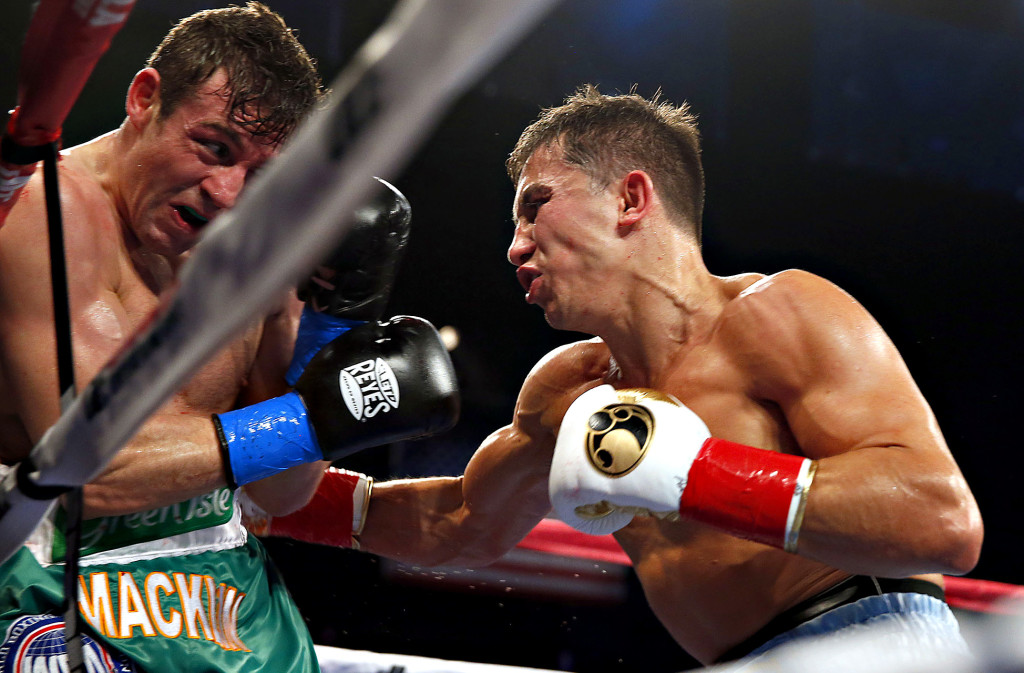
Now his legacy is, to some degree at least, in question, as the record books show that when he finally had a chance to capture the undisputed middleweight title of the world, he was held to a draw by Alvarez before losing to the Mexican a year later. The unfairness of this scenario is enough to make any fight fan who truly cares about the integrity of boxing, or what little of that is left, to weep. The simple truth is that Golovkin deserved better, much better. Here was a fighter who ducked no one, who in fact sought out matches against the toughest competition. He had earned the big paydays and the big chances that finally came his way, but in the end was denied the unequivocal triumph he deserved. This type of thing just doesn’t happen in other sports. Golovkin is now 36-years-old; his best days are clearly behind him. And while its tragic that he did not have the chance to test himself when he was at his best against the best, it’s equally tragic that years from now the assessment of his achievement will be tainted by these unfair and inaccurate scorecards.

Here is what should have happened: either Sergio Martinez or Miguel Cotto defends against Gennady and suffers defeat and immediately Canelo mans up and challenges the Kazakh power puncher, and he too falls at the feet of a peak Golovkin. And the boxing world debates and evaluates and celebrates a new boxing legend, one who can be compared to Hagler and Monzon and Ketchel. But it didn’t happen and the reason to lament this is not because it is unfair to Golovkin, but because it is unfair to boxing. The whole point of sports is to celebrate excellence, to witness great victories and noble efforts and pay tribute to them. As it stands, we should be celebrating the greatness of Gennady Golovkin right now after he proved himself in two tough wars with a gifted and formidable opponent. But we cannot. And that’s a damn shame.
— Robert Portis
The post Canelo vs Golovkin II: The Last Word appeared first on The Fight City.